Every personal injury attorney has lived through this. Strong liability. Real, documented injuries. A client whose life genuinely changed after the accident.
And the adjuster opens at $18,000.
It stings because the offer usually has nothing to do with the strength of your case. It has everything to do with how the insurance company pictures your case at trial. If the carrier can’t imagine a jury awarding big, they won’t pay big. Simple as that.
Legal animation changes what they imagine. Here’s how it works, why adjusters fear it, and what it does to real settlement numbers.
What Is Legal Animation in Personal Injury Cases
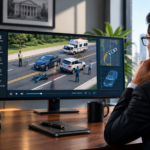
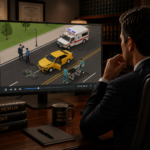
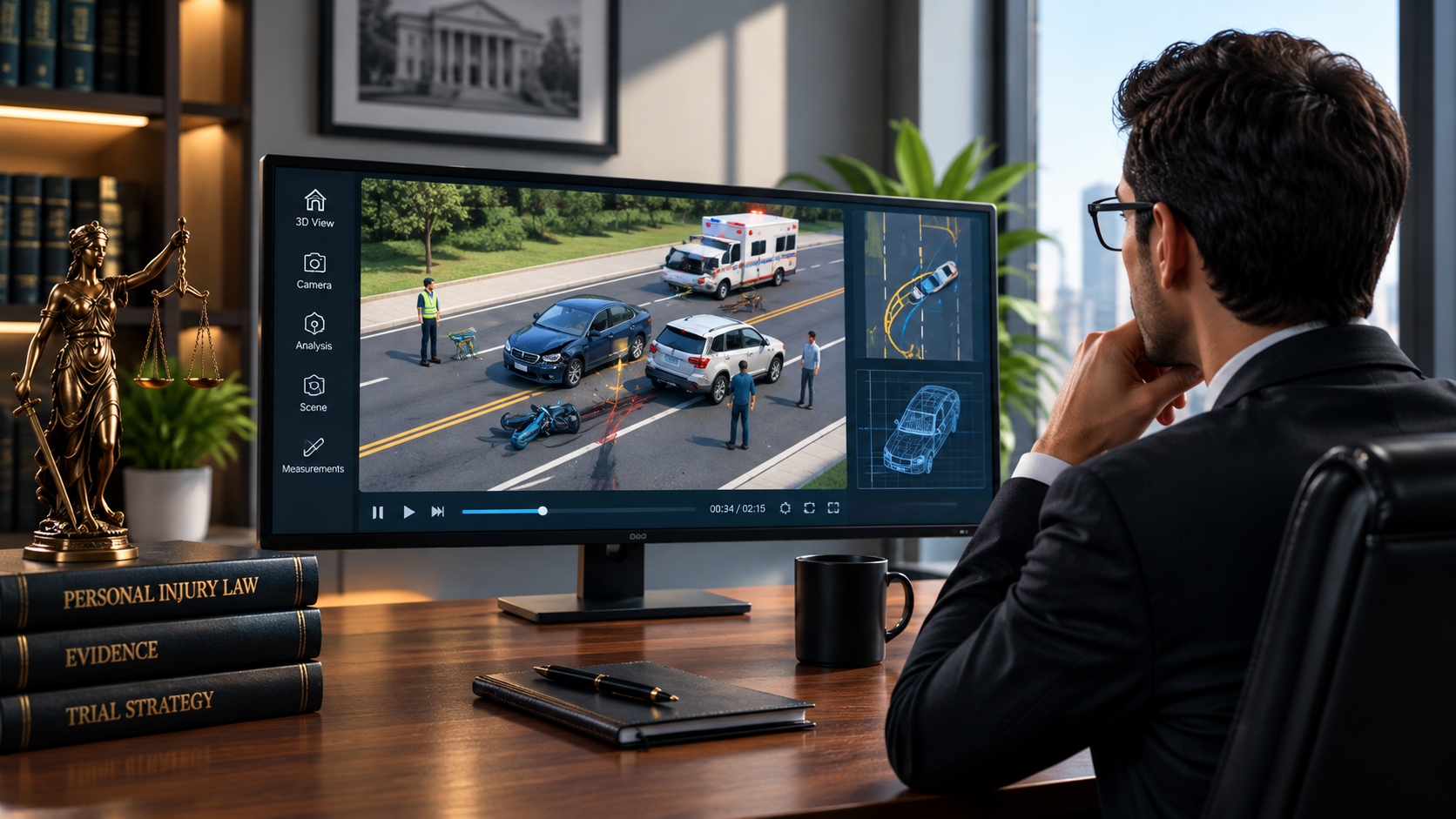
Let’s define terms first, because there’s a lot of confusion here. Legal animation is not a cartoon. It’s not a reenactment with actors. It’s a forensic reconstruction built piece by piece from evidence.
The medical records. The police report. The expert’s analysis. The scene measurements. All of that becomes the source material for a 3D visualization that shows what actually happened.
Evidence First, Always
A real legal animation traces every frame back to something documented. When an expert says the impact caused a flexion-distraction injury at L1, the animation shows that exact mechanism, built from imaging and biomechanical analysis.
This matters because adjusters have seen cheap “dramatization” videos and they dismiss them instantly. The moment your video is clearly sourced from the record, it stops being a sales tool and starts being a threat.
People Believe What They Can See
Jurors and adjusters are visual learners whether they admit it or not. A radiology report describes a herniation. An animation shows the disc material pressing into the thecal sac.
Once someone sees it, they can’t unsee it. That mental image sticks around long after the words are forgotten, and it quietly shapes every valuation conversation that follows.
Why Do Insurance Companies Settle Faster with Animated Evidence
Insurance companies don’t have feelings. They have spreadsheets. Every offer they make comes out of a risk calculation, and anything that raises their estimate of trial risk raises your number.
Animation raises that estimate fast.
Carriers Know What Juries Do with Video
Defense firms run focus groups. Carriers track verdict data. They know, with real numbers, that cases with strong visual evidence produce bigger verdicts than cases with identical injuries but no visuals.
So, when your demand package includes a polished, accurate reconstruction of your client’s injury, the adjuster isn’t watching art. They’re watching their reserve number go up.
Fog Is the Defense’s Best Friend
The standard defense playbook in injury cases is to complicate everything. Question the mechanism. Suggest degeneration. Raise doubt about causation.
None of that works when a jury-ready animation shows the mechanism clearly. And when the fog lifts early, cases settle early. Attorneys who use animation consistently report shorter timelines from demand to resolution.
Mediation Rooms Feel Different
If you’ve played an animation in mediation, you know the moment. The room goes quiet. Defense counsel starts taking notes. The mediator finds a reason to talk to the defense team in the hallway.
That shift in body language is worth money. Demands that looked aggressive on paper start looking reasonable once the carrier sees what a jury will see.
How Does Animation Simplify Complex Injuries for Juries
Your typical juror has never read an MRI. They’ve never heard of a cauda equina syndrome or a diffuse axonal injury. And they won’t ask questions during trial, because jurors mostly sit there trying to keep up.
If they can’t keep up, they fall back on the simplest story in the room. Usually that’s the defense story.
Invisible Injuries Need a Face
Soft tissue injuries, nerve damage, brain injuries, these are the cases that get undervalued because nothing looks broken from the outside. X-rays don’t scream. Clients look fine in the courtroom.
Animation gives invisible damage a visual form. A jury watching axons shear inside a skull during a rotational impact understands immediately why your client has headaches two years later.
Three Seconds Beats Thirty Minutes
An expert can spend half an hour explaining how a disc herniates under axial loading. Or the jury can watch it happen in three seconds and get it forever.
Comprehension is the currency of personal injury trials. The side that gets understood first usually wins, and animation buys that understanding cheap.
Doubt Needs Confusion to Survive
Defense cross-examinations thrive on muddying expert testimony. Jurors leave confused, and confused jurors don’t award big.
A clear animation is anti-mud. It gives jurors a fixed picture to hold onto while the defense tries to blur everything around it.
Which Personal Injury Cases Benefit Most from Animation
Honest answer: not every case. If your case is worth $40,000, a $12,000 animation probably doesn’t make sense. But certain case types see returns that aren’t even close.
| Case Type | Why Animation Hits Hard |
| Traumatic brain injury | Makes invisible damage real and provable |
| Spine and disc injuries | Shows mechanism, kills the “degenerative” defense |
| Commercial vehicle crashes | Reconstructs dynamics no witness can describe |
| Product liability | Shows the defect and failure sequence step by step |
| Medical malpractice with injury | Translates what the provider did wrong |
Value Matters More Than Injury Type
The real question is whether the case value justifies the spend. Once you’re realistically in the mid-six figures or above, the math almost always works.
And remember, animation is a case expense, which changes how clients think about it. You’re not spending their recovery. You’re investing the file.
Liability Fights Count Too
Animation isn’t only for damages. A good reconstruction can settle a disputed left-turn case before depositions even start, which saves everyone money and gets your client paid faster.
How Much Can Animation Increase a Settlement Offer
Nobody ethical promises you a multiplier. Run from anyone who does. But the pattern across thousands of cases is clear enough that carriers have internal data on it. Visual evidence moves numbers.
What Actually Happens in Practice
Attorneys who use animation report a few consistent things. Fewer ridiculous opening offers. Fewer causation fights. Faster movement toward realistic numbers once the carrier’s own experts review the video.
The mechanism is simple. Valuation is a story the adjuster tells their supervisor. Your animation rewrites that story in your client’s favor.
Do the Math Yourself
Say your case has $400,000 in realistic exposure. A $10,000 animation that moves the offer even 15% pays for itself six times over.
Now imagine it tips a case from $750,000 into policy limits. That’s the outcome that makes partners smile.
Is Legal Animation Admissible in Settlement Negotiations
Here’s the part most people miss. You don’t need admissibility for animation to work. Settlement negotiations, mediation, and demand packages have no evidence rules at all.
Your animation operates at full power long before any judge weighs in.
Demand Packages and Mediation Are Wide Open
Sending video with your demand letter is standard practice. The defense evaluates risk, and your reconstruction is the risk.
In fact, most animations never see a courtroom. They do their work at mediation, in conference rooms, on a laptop between defense counsel and the carrier’s claims manager.
Build to Trial Standard Anyway
Even though settlement use needs no ruling, every serious studio builds animations to survive Daubert or Frye review. There’s a reason for that.
A trial-ready animation tells the defense you’re ready to actually try the case. Bluff cases get low offers. Prepared cases get paid.
What Is the Legal Animation Process Before Trial
The process worries some attorneys because it’s unfamiliar. It shouldn’t. A professional studio runs a structured workflow designed around litigation deadlines.
Step 1: Records Review
Everything goes to the studio like medical records, accident reconstruction animation cost reports, imaging, expert reports, scene photos. This is the foundation. No foundation, no animation.
Step 2: Script and Storyboard
You approve the narrative before animation begins. This is where your theory of the case gets baked in, and where you kill anything that overstates the evidence.
Step 3: Build and Expert Review
The 3D work happens here. Your experts review drafts at every stage and sign off in writing. Nothing finalizes without their approval.
Step 4: Delivery
You get courtroom-ready files formatted for your presentation setup, plus the documentation your expert needs to lay foundation at trial.
How Do Attorneys Use Animation in Mediation
Mediation is where most injury cases resolve, and it’s where animation earns its keep. But deployment matters.
Play It Early, Play It Once
Smart attorneys open mediation with the animation. It sets the frame for the entire day. The defense spends the rest of the mediation reacting to your story instead of pushing theirs.
Mediators notice too. A mediator who believes in your case argues for you in the other room, and belief follows clarity.
It Moves the Policy Limits Conversation
There’s a specific moment in every big mediation where the carrier decides whether this case justifies exhausting limits. Animation is often what pushes borderline files over that line.
Cases that would have settled for low six figures settle for high six or seven. It happens regularly enough that defense firms now specifically ask during mediation prep whether the plaintiff has video.
How to Choose the Right Legal Animation Company
The market has exploded, and quality varies wildly. Picking wrong wastes money and can hurt your case. Here’s what separates professionals from pretenders.
· They want your expert involved. If a studio says expert review is optional, hang up.
· They work on legal timelines. Trial dates don’t move. Studios that miss deadlines cost you cases.
· They document everything. Source logs, assumption tracking, revision history.
· They’ve been through admissibility fights. Ask directly whether their work has survived Daubert challenges.
Questions That Reveal the Truth
Ask who reviews medical accuracy. Ask how many revision rounds are included. Ask for references from attorneys who’ve used their work at trial.
And ask the one question that filters out 80% of the market: “Will you build this to admissibility standard?” If the answer is vague, keep looking.
FAQs on Legal Animation and Settlement Value
Does legal animation actually increase settlement offers?
Yes, consistently. Visual evidence raises the carrier’s perceived trial risk, and risk drives valuation. Attorneys regularly see higher and faster offers after animation enters the file.
How much does a personal injury animation cost?
Simple mechanism-of-injury videos typically run $5,000 to $12,000. Full accident reconstructions with multiple scenes range from $12,000 to $30,000 or more.
Can I use animation if my case will never see trial?
Absolutely. Settlement talks and mediation have no evidence rules. Most animations do their work before a trial date is ever set.
Is it worth it for a smaller case?
Only if the numbers work. Compare production cost to realistic case value. Below a certain threshold, the math doesn’t justify it, and any honest studio will tell you that.
How long does production take?
Plan on four to eight weeks for standard projects. Rush delivery is available for mediation and trial deadlines.
What do you need from me to start?
Medical records, the accident report, any expert analysis, and scene photos if you have them. The studio will tell you exactly what’s missing.
Conclusion
Personal injury cases settle for what the defense fears, not what your client deserves. Legal animation changes the fear by changing the picture in the adjuster’s head.
When the carrier can see what a jury will see, offers go up and timelines shrink. That isn’t hype. It’s how risk valuation works.
As a Law Animator, you hire legal animation company, every personal injury animation we deliver is built from the record, reviewed by your experts, and produced to trial standard. Our personal injury animation services USA team has supported cases from demand letter through verdict, and we treat your deadline like our own.